Affiliate Marketing 101: The Beginner's Blueprint
1. What is Affiliate Marketing? (And How Does It Actually Work?)
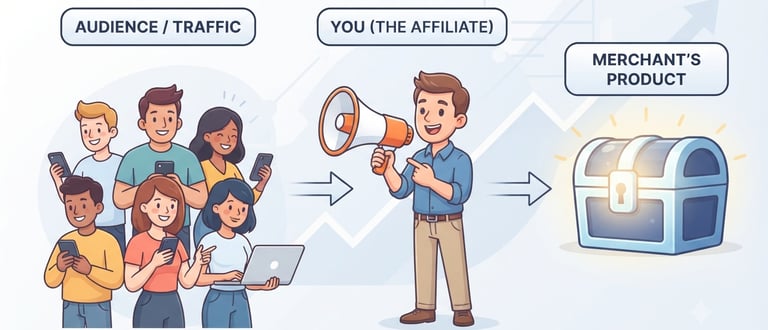
Affiliate marketing is fundamentally a digital referral partnership. When you recommend a product, software, or service to an audience and they make a purchase using your unique tracking link, the company rewards you with a commission for driving that sale.
Think of it like recommending your favorite restaurant to a friend. The primary difference is that instead of a casual "thanks," the business uses digital attribution tracking to trace the transaction back to you and pays out a verified percentage of the sale.
The 4 Key Players in the Ecosystem
The Merchant (The Creator): The company or individual who creates, owns, and fulfills the product or service.
The Affiliate (You): The digital marketer, content creator, or publisher who curates trust and recommends the product to an engaged audience.
The Consumer (The Buyer): The end user looking for a solution to a problem who purchases through your trusted recommendation.
The Affiliate Network: The centralized platform or marketplace that tracks clicks, manages sales data, and handles payouts.
Why It’s a Win-Win Model
For Businesses: It represents risk-free performance marketing. Companies only pay commissions after a verified sale or lead is secured.
For You (The Affiliate): You completely bypass product creation, inventory management, shipping logistics, and customer support.
Pro Tip on Digital Real Estate: While you don't need to create a physical product, treating your business like a real enterprise starts with owning your digital foundation. Setting up your professional hub on Hostinger gives you a fast, reliable web presence to house your brand securely from day one
Artificial Intelligence: How AI Powers Modern Affiliate Marketing
The digital landscape has fundamentally changed. Artificial intelligence is no longer a futuristic concept—it is the underlying engine driving modern online business, content creation, and search discovery. For affiliate marketers, understanding how to leverage AI separates businesses that scale rapidly from those that burn out on manual hours
The 3 Core Ways Affiliate Marketers Use AI
Content Acceleration & Production:
What it does: AI tools help draft outlines, structure blog posts, build email sequence frameworks, and rewrite copy across multiple angles in minutes rather than days.
The Golden Rule: AI is a production accelerator, not a replacement for human authority. The best affiliates use AI to draft quickly, but inject personal insights, verified facts, and brand voice to maintain trust.
Data Analysis & Audience Intent:
What it does: Predictive analytics and data intelligence tools (like Semrush) analyze market behavior, search intent patterns, and competitor gaps with massive accuracy, taking the guesswork out of niche selection.
Conversational Funnels & Automation:
What it does: Integrating AI-driven elements into your Systeme.io ecosystem allows you to streamline lead qualification and answer preliminary user questions dynamically, building "conversational commerce" loops that convert traffic 24/7.
Traditional SEO vs. GEO: Why AI Search Changes How You Get Found
As millions of users turn to AI engines (like ChatGPT, Perplexity, Claude, and Google AI Overviews) instead of traditional blue links to make purchasing decisions, optimization has expanded beyond standard search engine optimization
Traditional SEO: Optimizing keywords, metadata, and backlinks to rank high on a traditional search results page.
Generative Engine Optimization (GEO): Structuring your content so AI search engines can easily read, parse, and cite your brand as the definitive source inside a generated answer.
OptimizeGEO
How to win: By writing self-contained paragraphs, using comparison tables, and answering user questions directly upfront, your Hostinger-powered site becomes prime material for AI citations—driving high-intent traffic directly to your affiliate funnels.
Phase 1: Foundations & Strategy
Table on Contents
Phase 1: Foundations & Strategy
Phase 2: Building Your Infrastructure
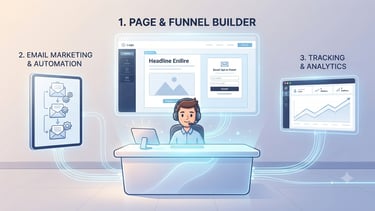
2. The Anatomy of an Affiliate Funnel
One of the most common mistakes beginners make is pasting raw affiliate links directly across social media channels and forums. This looks spammy, destroys consumer trust, and yields miserable conversion rates. Successful affiliate marketers use a structured funnel to guide traffic naturally.
The Old Way vs. The Modern Way
The Old Way: Directing cold traffic straight from a social media post or ad to a raw affiliate sales page. Conversion rates plummet because cold traffic rarely buys from an unfamiliar brand on the first click.
The Modern Way: Directing traffic to a clean bridge page (or lead capture page) first. You offer something valuable for free (such as a checklist, guide, or mini-course) in exchange for an email address, allowing you to build an automated relationship and promote offers over time.
Building Your Funnel with Systeme.io
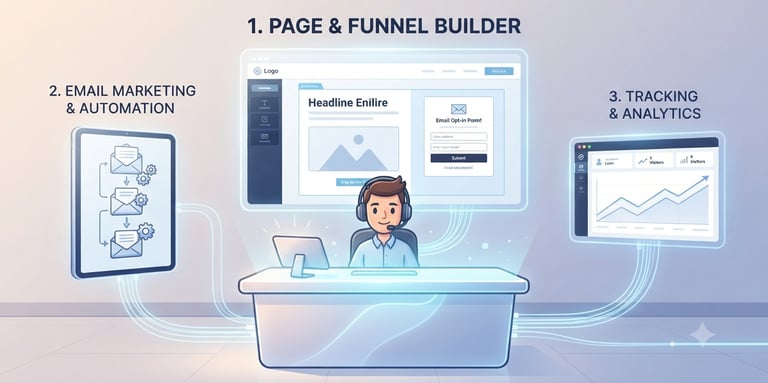
Instead of stitching together complicated code, expensive plugins, or messy web builders, professional affiliate marketers use Systeme.io. It is the all-in-one platform used to build clean bridge pages, high-converting opt-in forms, and automated email follow-up sequences that sell products for you 24/7 without requiring any technical background.
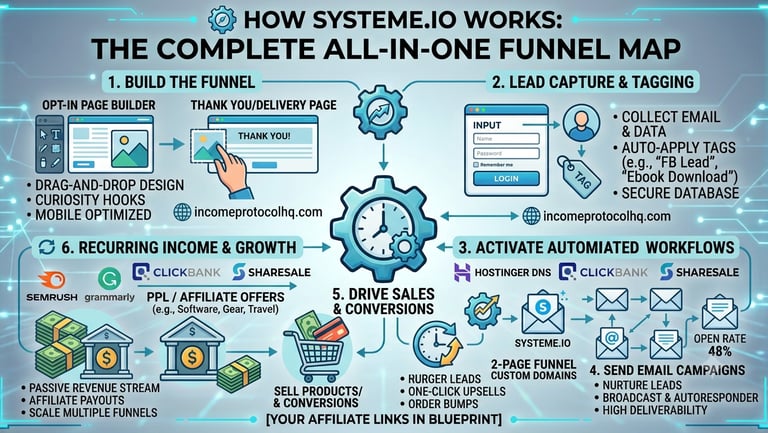
Custom graphic illustrating the infrastructure engine, created with Gemini.
3. How to Choose a Profitable Affiliate Niche (Step-by-Step)
A niche is your specific corner of the market. Trying to appeal to everyone on the internet means appealing to no one.
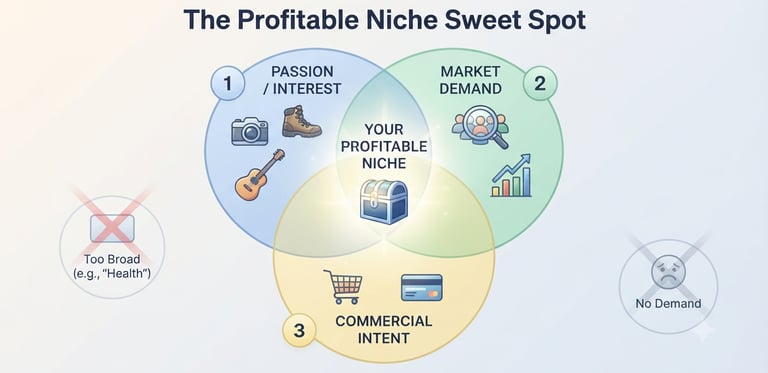
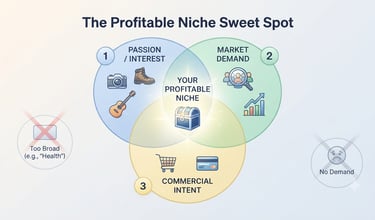
Passion vs. Profit: Finding the Sweet Spot
The ideal niche sits precisely at the intersection of three key pillars:
Interest: Something you enjoy learning about, discussing, or building content around.
Audience: A distinct group of people actively searching for answers and solutions.
Commercial Buyer Intent: An audience with problems that cost money to solve, meaning they are willing to spend cash on software, tools, or resources.
Validating Your Niche with Semrush
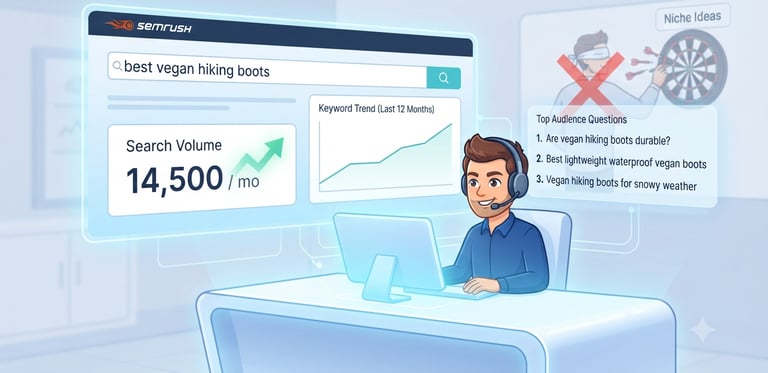
Never guess whether people are looking for solutions in your niche—let real data guide your direction. Semrush is the industry-standard tool used to perform exact keyword research, analyze search volumes, and uncover the exact questions your target audience is typing into search engines. This ensures you step into a market with active buyer demand before investing hours into writing content.
4. The Modern Monetization Matrix: High-Ticket vs. Recurring vs. Physical Commissions
Not all affiliate dollars are created equal. One of the biggest mistakes beginners make is chasing low-paying physical products without realizing the sheer volume of traffic required to generate a full-time income.
To scale efficiently, you must understand how the three primary commission models work and how to blend them strategically inside your funnels.
The 3 Core Commission Models Compared
Commission Type ,Payout Structure, Examples Why It Matters
1. Physical / Low-TicketLow ($1 – $50) flat fee or 1% to 10% cutAmazon, retail gear, lifestyle productsEasy consumer trust and high conversion volume, but requires massive traffic to scale.
2. High-Ticket SaaS / InfoHigh ($100 – $500+) flat fee per saleSemrush, high-end courses, business softwareMassive cash injection per conversion; a single sale can equal dozens of physical product sales.
3. Recurring SoftwareMonthly percentage (e.g., 30% to 40% every month)Systeme.io, PartnerStack programsThe holy grail of affiliate income. Compounds over time so you get paid month after month for a single referral.
How to Balance Your Portfolio
A healthy, profitable affiliate business avoids relying on just a single monetization model.
The Sweet Spot: Combine recurring software (like Systeme.io) to build a stable baseline of monthly predictable revenue, high-ticket tools (like Semrush) for major cash injections, and essential infrastructure (like Hostinger) to catch everyday website conversions.
The Scaling Secret: Focus your content primarily on software and digital solutions where commissions are higher and products solve urgent, painful business problems. People will gladly invest in tools that help them make or save money.
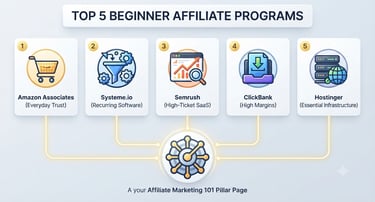
1. The 5 Best Affiliate Programs for Beginners
Choosing the right affiliate programs can make or break your business. Beginners often make the mistake of joining thousands of random programs or settling for low-paying retail networks that take months to generate meaningful revenue.
To build a sustainable income, you want to focus on beginner-friendly programs that offer strong commissions, trusted brand authority, and reliable cookie durations or lifetime attribution models.
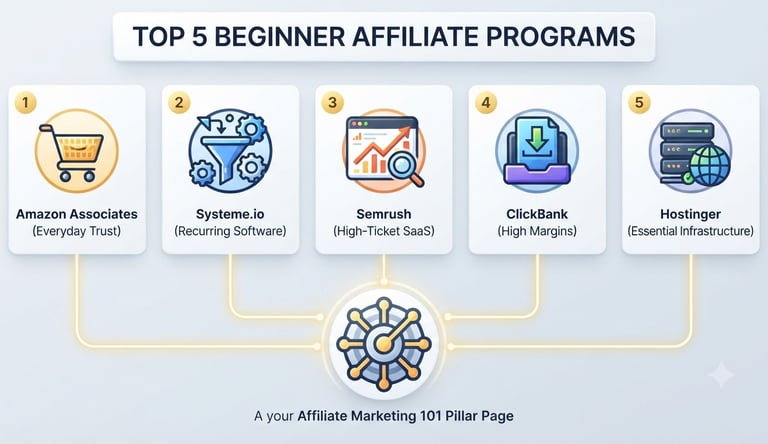
The Top 5 Programs to Target
Systeme.io (The Recurring Powerhouse): Offers a massive 60% lifetime recurring commission on all subscriptions and course sales. Because it is an all-in-one platform, users stick around for years, giving you predictable monthly passive income.
Semrush (The High-Ticket SaaS): One of the gold standards in digital marketing software. High-tier software affiliate programs provide lucrative payouts per conversion, allowing a small number of targeted sales to generate substantial revenue.
Hostinger (The Essential Foundation): Offers competitive commissions for referring web hosting and digital infrastructure. Since every serious online entrepreneur needs a reliable website, web hosting is one of the easiest niches to convert.
ClickBank or Digistore24 (The Digital Marketplaces): Great for beginners looking for massive directories of digital info-products, courses, and software across hundreds of distinct niches, featuring high default commission splits (often up to 50% to 75%).
Amazon Associates (The Volume Play): While commissions are low (typically 1% to 3%), Amazon converts exceptionally well because almost everyone already has an active account and saved credit card. Use Amazon strategically for product roundups rather than a primary income source.
Phase 2: Building Your Infrastructure
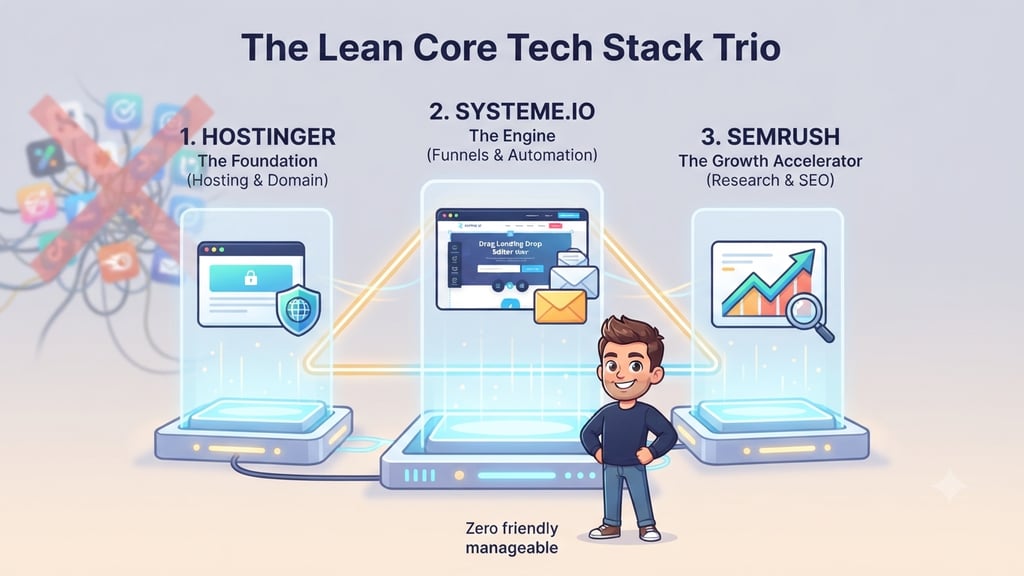
2. Essential Tools of the Trade (Your Core Tech Stack)
Trying to build an online business with free, disconnected tools results in broken links, messy workflows, and endless technical headaches. Professional affiliate marketers rely on a lean, high-performance tech stack designed to handle traffic conversion, data tracking, and hosting seamlessly.
Your Core Infrastructure Stack
Web Hosting & Domain Hub (Hostinger): Your primary digital real estate foundation. Hostinger provides blazing-fast load speeds, secure SSL certificates, and dependable uptime, ensuring your brand looks professional from day one.
Funnel & Email Automation Builder (Systeme.io): The engine of your business. Systeme.io replaces multiple expensive platforms by combining landing page creation, sales funnels, email broadcast systems, and affiliate management into a single dashboard.
Keyword & Competitor Intelligence (Semrush): Your market research engine. Semrush eliminates guesswork by showing you exactly what terms your audience is searching for, what content ranks on page one, and where your competitors are getting their traffic.
3. How to Build Your First High-Converting Bridge Page
A bridge page is a minimalist, single-purpose web page that sits between your traffic source (like a Facebook post, Reddit thread, or SEO article) and your affiliate offer. Its primary job is not to sell—it is to build trust and capture an email address.
The 3 Core Elements of a High-Converting Bridge Page
A Compelling Hook & Headline: Address the visitor's immediate pain point or goal. Match the message of the link they clicked so they instantly know they are in the right place.
The Value Lead Magnet: Offer a free resource (such as a checklist, blueprint, or template) that solves a minor problem instantly. People gladly trade their email address for a high-value shortcut.
A Clear Call-to-Action (CTA): Direct them cleanly to the next step, whether that is downloading the resource or stepping directly into your recommended solution via your affiliate link.
Building It Fast with Systeme.io
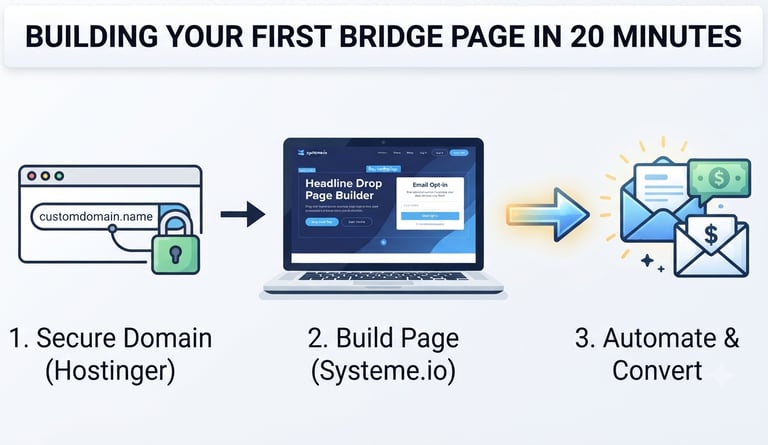
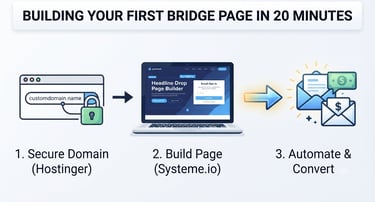
Instead of coding from scratch, open your Systeme.io dashboard, select a clean, minimalist squeeze page template, swap out the text to match your offer, and connect your custom domain hosted on Hostinger. The entire setup takes less than an hour.
4: How to Craft a High-Converting Email Sequence
Capturing an email address is only half the battle; the real profit in affiliate marketing is generated in the follow-up sequence. Most visitors will not buy on their first visit, which is why an automated email sequence nurtures relationships over days and weeks.
The 5-Part Automated Email Framework
Email 1: The Delivery & Welcome (Immediate): Deliver the free lead magnet they signed up for immediately. Set expectations for what kind of value you will share moving forward.
Email 2: The Origin Story / Empathy (Day 2): Share your personal experience or the struggle you faced before finding the solution. People connect with stories, not corporate sales pitches.
Email 3: The Value & Proof Case Study (Day 3): Break down how a specific tool or strategy solved a major problem. Highlight real results or data points.
Email 4: The Direct Pitch & Soft Bonus (Day 4): Introduce your primary affiliate offer (such as Systeme.io or Semrush) as the ultimate vehicle to achieve their goals. Frame it around utility and ROI.
Email 5: The Urgency & Final FAQ (Day 5): Address common objections or hesitations. Remind them why acting now prevents further wasted time or money.
Pro Tip: Set this up once inside Systeme.io’s automation rules, and your business will run on autopilot—nurturing leads and generating commissions 24/7 while you focus entirely on driving new traffic.
Phase 3: Driving Traffic
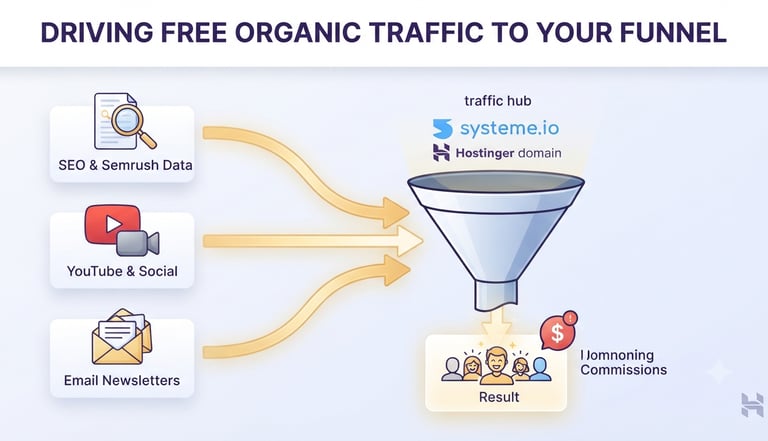
1. The Ultimate Guide to Free Organic Traffic (How to Get Eyes on Your Funnel)
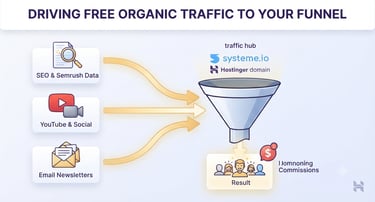
Building the best funnel in the world won't make you a dime if nobody sees it. The biggest myth in digital marketing is that you must spend thousands of dollars on paid ads to get traction. In reality, some of the highest-converting, most sustainable businesses run entirely on free organic traffic. Organic traffic means people find your content naturally through search engines or social media because you are answering questions they are already asking.
The 3 Core Pillars of Free Traffic
Search Engine Optimization (SEO) & AI Search: SEO is the original compounding traffic source. When you publish helpful, structured content that solves problems, search engines—and modern AI search engines like ChatGPT and Google's AI Overviews—send visitors to your site for free 24/7.
The Tool Advantage: Instead of guessing what to write about, use Semrush to uncover exact keyword data, search volumes, and audience questions. This ensures every piece of content you build on your Hostinger-powered site targets a market with active buyer demand.
The AI Search Shift: Modern search is shifting toward conversational queries. To rank in AI overviews and search engines, structure your articles with clear headings, direct answers to common user questions, and deep contextual insights that generative text engines can easily parse and cite.
Organic Social Media & Content Platforms: Platforms like YouTube, Pinterest, and short-form video channels allow you to put your content in front of millions of active users without spending a cent on ads.
The Strategy: Create educational "how-to" videos, product breakdowns, or visual guides. Never link directly to a raw affiliate link from social posts—instead, drive that traffic to your Systeme.io bridge page or lead capture form to build your email list.
Platform Specialization: Use Pinterest for long-tail visual search traffic that links back to your review articles, and use short-form video (TikTok, Instagram Reels, YouTube Shorts) to capture fast-moving attention and direct viewers to your link-in-bio hub.
Email Newsletters (The Traffic You Own): Social media algorithms change overnight, but your email list is yours forever. When you capture emails using your Systeme.io funnels, you can drive free, instant traffic to your new content or offers with a single click whenever you want.
The Broadcast Loop: Every time you publish a new article or review on your site, broadcast it directly to your subscriber base to generate an immediate wave of baseline engagement and traffic signals.
The Golden Rule of Free Traffic
Don't try to master every platform at once. Pick one primary search or social channel to carry 70% of your effort, use Semrush to plan your topics, host your hub securely on Hostinger, and funnel every visitor into your Systeme.io automated system. Once your primary channel is predictable and running smoothly, expand outward to secondary traffic sources.
Phase 4: Tracking, Optimization & Avoiding Pitfalls
1. Setting Up Your Analytics & Tracking: How to Know What's Working
Amateurs guess what is working; professionals look at data. If you don't track where your traffic originates or which links your audience clicks, you are flying blind.
Tracking doesn't require a degree in data science. By setting up basic tracking loops, you can immediately identify your winning content, double down on what generates real commissions, and eliminate strategies that waste your time.
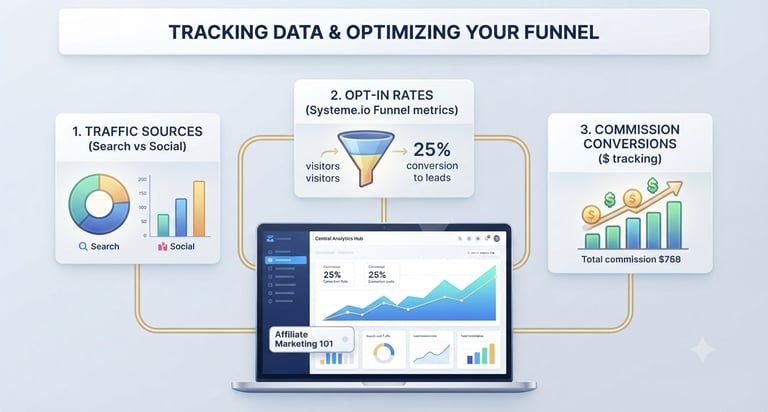
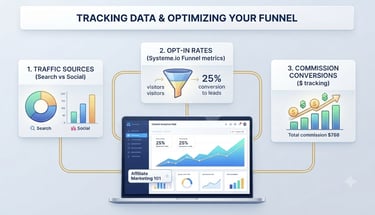
The 3 Core Metrics Every Affiliate Must Track
Traffic Sources (Where Are People Coming From?):
Why It Matters: You need to know if your revenue is driven by search engines, social media platforms, or your email sequence.
How to Do It: Combine Google Analytics 4 (GA4) with custom UTM parameters (e.g., utm_source, utm_medium, utm_campaign) on external links. This allows you to track exact traffic origins coming into your site hosted on Hostinger.
Opt-In Conversion Rate (Is Your Bridge Page Working?):
Why It Matters: Your conversion rate determines how efficiently your landing page converts visitors into subscribers:
$$\text{Opt-In Rate} = \left( \frac{\text{Total Opt-Ins}}{\text{Total Bridge Page Visitors}} \right) \times 100$$
If 100 people visit your page and 1 gives you their email, your rate is 1%. Tweaking your headline to reach 5% immediately 5x's your lead acquisition with the exact same volume of traffic.
How to Do It: Monitor opt-in percentages directly inside your Systeme.io dashboard to test and optimize headlines, forms, and button designs.
Click-Through Rate (CTR) & Earnings Per Click (EPC):
Why It Matters: Tracking click rates on affiliate links (whether for Hostinger, Systeme.io, or Semrush) reveals what your audience actually wants to buy. EPC measures the average dollar value earned every time someone clicks your link.
How to Do It: Check performance dashboards inside individual affiliate networks to evaluate click volume and overall conversion rates.
The Weekly Optimization Loop: Review your metrics once a week. If an article drives high traffic but zero opt-ins, adjust your lead magnet or bridge page call-to-action (CTA). Small, data-backed tweaks lead to compounding revenue leaps over time.
2. Analyzing Your Data & Scaling What Works
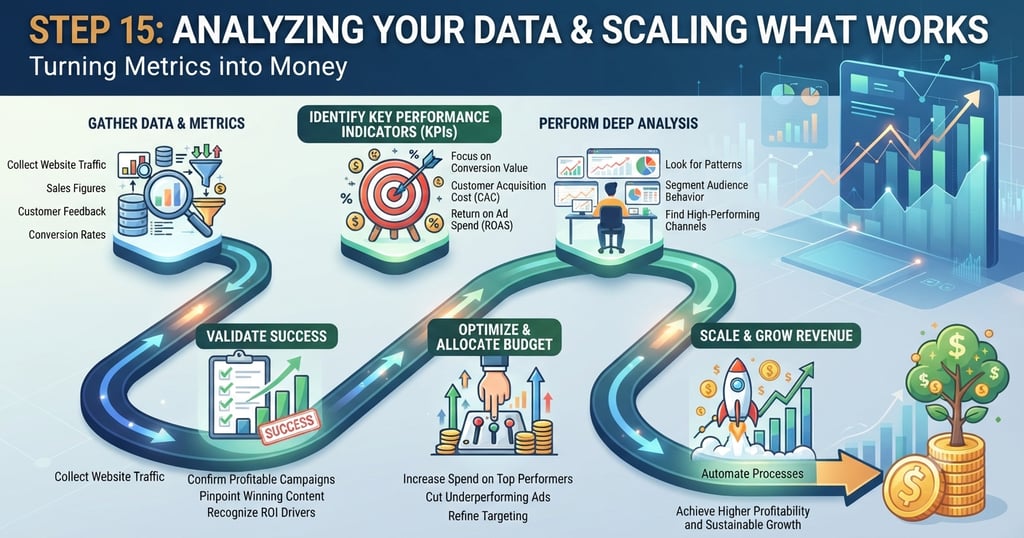
Once your tracking is active, optimization transitions from passive observation to proactive scaling. Instead of continually creating content on brand-new topics, focus on expanding what is already proven to generate revenue.
How to Scale Your Winning Assets
Content Pruning & Upgrades: Identify your top 20% highest-traffic articles using Semrush and GA4. Refresh them with updated recommendations, better formatting, or clearer CTAs to boost search rankings and affiliate clicks.
Double Down on High-EPC Offers: If recurring software like Systeme.io generates higher lifetime customer value than one-off physical product recommendations, shift more of your primary content toward software tutorials and workflow guides.
Repurpose Top Performing Angles: Take an email sequence or review article that generated high conversion rates and reformat it into a short-form video, a social post, or a downloadable cheat sheet.
3. The Legal Stuff: FTC Disclosures, Privacy Policies & Site Compliance
Transparency isn't just an ethical choice—it is a strict legal requirement. Operating an affiliate marketing website means you must comply with regulatory bodies like the Federal Trade Commission (FTC), as well as data privacy laws. Ignoring compliance can result in heavy financial penalties and a complete loss of audience trust.
The FTC Affiliate Disclosure Mandate
The FTC requires any marketer with a "material connection" to a brand to clearly and conspicuously disclose that relationship.
What Triggers It: Earning commissions, receiving free software trials, or being gifted tools (such as free access to Hostinger or Semrush) means you must disclose.
Placement Rules: Disclosures must appear before any affiliate links or buy buttons. Putting a disclosure buried in a website footer or hidden behind an "About Us" page violates FTC guidelines.
The Golden Rule of Text: Use plain, unambiguous language. A clear statement like "Affiliate links below—I may earn a commission at no extra cost to you" should sit right under your article title or immediately before your recommendation blocks.
Essential Legal Pages Every Site Needs
To protect your brand and satisfy search engine quality raters, your Hostinger-powered site should feature these standard legal pages in the footer:
Affiliate Disclosure: Explains your monetization model and relationship with networks clearly.
Privacy Policy: Required if you collect emails via Systeme.io forms or use cookies/analytics trackers. It must outline what data you collect and how it is used.
Terms & Conditions: Defines user rules, disclaimers regarding financial advice, and intellectual property rights for your content.
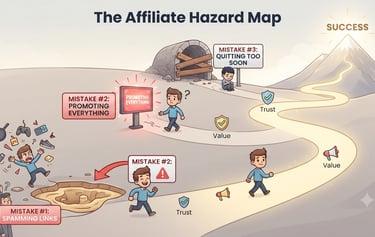
4. The 5 Most Costly Beginner Mistakes to Avoid
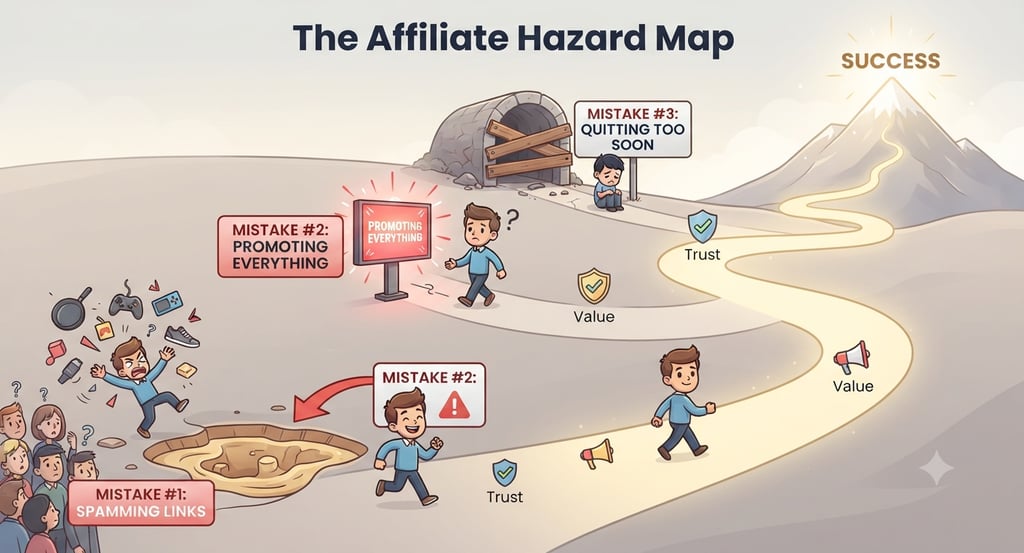
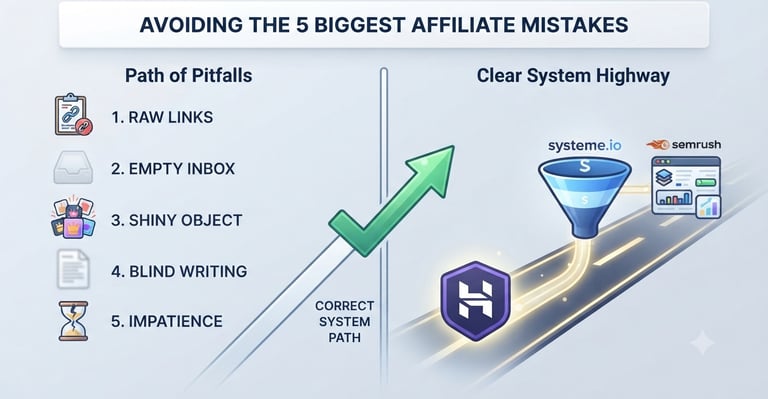
Avoiding critical pitfalls is just as important as implementing the right strategy. Steer clear of these 5 common errors that cost beginner affiliate marketers time and money:
Direct Linking Cold Traffic: Sending visitors straight from a social post or forum to a raw affiliate link destroys conversion rates and prevents you from building an email list. Always use a Systeme.io bridge page.
Chasing Too Many Niches at Once: Spreading yourself thin across health, wealth, and lifestyle niches prevents you from establishing topical authority. Pick one core audience, solve their specific problems, and dominate that market first.
Ignoring SEO & Intent Data: Writing about topics based on gut feeling rather than search intent leads to zero traffic. Always validate search volume, difficulty, and buyer intent using Semrush before drafting content.
Neglecting Email List Nurturing: Collecting emails without sending valuable automated follow-up sequences leaves thousands of dollars on the table. Your automated sequence is where trust is cemented and recurring sales are made.
Expecting Overnight Success Without Infrastructure: Affiliate marketing is a real enterprise, not a "get-rich-quick" scheme. Building your brand on a dedicated platform powered by Hostinger ensures you own your digital asset for the long term.
1. Advanced Expansion: Bonus Tools, Private Programs & Networks
Once your core funnel is operational, traffic is flowing, and your tracking loops are locked in, scaling your income relies on moving past standard public affiliate programs and tapping into private ecosystems.
Expanding Into High-Value Partnerships
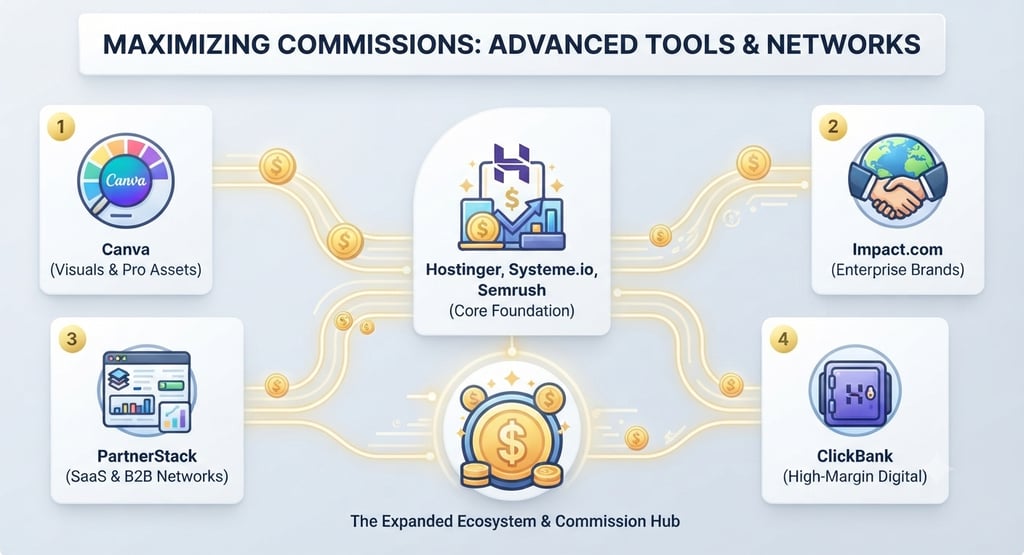
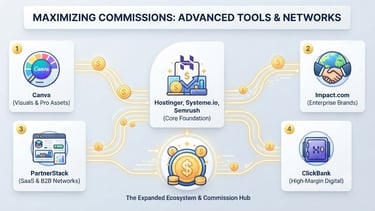
Private Affiliate Programs: Many SaaS platforms and high-end digital creators host private or unlisted affiliate programs through networks like PartnerStack, Rewardful, or FirstPromoter. These programs often feature higher payouts, custom commission tiers, and dedicated affiliate managers who can supply swipe files, custom graphics, and exclusive coupon codes for your audience.
The Stack Expansion Model: Introduce complementary software to your core stack. For instance, if your audience relies on Systeme.io for funnels and Semrush for traffic research, expand your content matrix to cover adjacent tools (such as video editing software, design tools like Canva, or advanced copywriting assistants) that solve downstream problems for online entrepreneurs.
Creating Content Bundles & Bonus Stacks: The most successful advanced affiliates don't just sell software—they create custom "bonus stacks." When someone purchases a tool through your affiliate link (like Hostinger or Semrush), give them free access to an exclusive custom template, private community, or advanced video training. This dramatically increases your conversion rate compared to competitors promoting the exact same product.
Phase 5: Advanced Expansion & Future-Proofing
2. Future-Proofing Your Business: Winning the AI Search & GEO Era
The traditional affiliate playbook—relying exclusively on static keyword ranking lists of blue links—is rapidly evolving. Modern consumers increasingly use AI platforms like ChatGPT, Perplexity, Claude, and Google AI Overviews to research products and make purchasing decisions.
To future-proof your business, you must pivot from standard SEO to Generative Engine Optimization (GEO) and Answer Engine Optimization (AEO).
How AI Search Changes the Game
From Clicks to Citations: In traditional search, a user clicks your link in position #3. In AI search, the generative engine reads your content, extracts core facts, and cites your brand directly inside a synthesized answer. Even if a user doesn't click immediately, being cited by AI establishes your brand as the definitive authority.
The Multi-Turn Conversation: Users rarely ask AI a single isolated question; they engage in multi-turn Q&A sessions (e.g., asking for a tool recommendation, then requesting a comparison, followed by implementation steps). Your content must anticipate these sequential follow-up queries.
Actionable GEO Strategies for Your Website
Put the Direct Answer Upfront: Generative models extract passages most reliably from the opening lines of a section. Avoid long, fluffy introductions—state the direct answer or definition in the first sentence, then provide contextual depth below it.
Write Self-Contained Paragraphs: AI engines parse text in discrete chunks rather than reading entire pages as a monolith. Ensure every paragraph stands on its own, leads with a clear subject, and covers one distinct idea without relying on vague pronoun openers like "This is why..."
Use Structured Data, Tables, and Bullet Points: AI engines heavily favor structured formats. Research shows that bulleted lists and comparison matrices have vastly higher extraction and citation accuracy across LLMs than dense prose.
Build Topical Authority Across Ecosystems: AI models evaluate credibility by looking at how your brand is referenced across the broader web. Pairing your Hostinger site architecture and Semrush keyword insights with active community presence (such as helpful discussions on Reddit or technical forums) creates the multi-touch brand footprint that AI citation algorithms rely on.
3. Modern Expansion: Social Commerce, Bonus Stacks & LTV Maximization
Moving past standard affiliate tactics requires mastering modern consumer habits, standing out in crowded markets, and optimizing for long-term revenue rather than quick, one-off payouts.
The Rise of Social Commerce & Short-Form Video Funnels
Traditional blogging and text-based SEO are powerful, but digital consumption habits have shifted toward mobile-first and in-app experiences.
The Shift: Platforms like TikTok Shop, Instagram Reels, and YouTube Shorts allow users to discover products and check out instantly without leaving the platform.
The Affiliate Strategy: Use short-form video as a top-of-funnel magnet to capture rapid attention. Instead of sending viewers to raw, messy links, direct that mobile traffic straight into your Systeme.io bridge page or mobile-friendly link-in-bio hub to capture their email address before sending them to the offer.
Crafting "Bonus Stacks" to Outconvert Competitors
Anyone can drop an affiliate link on a review page, but top earners win by offering unique value that competitors cannot match.
The Concept: When a user purchases a tool through your affiliate link (such as Hostinger, Semrush, or Systeme.io), reward them with a custom "bonus stack"—such as pre-built landing page templates, private community access, or exclusive video setup guides.
Why It Works: It completely removes buyer hesitation. The perceived value of your custom bonus package often outweighs the software purchase itself, drastically skyrocketing your conversion rates.
Lifetime Value (LTV) vs. Quick Commissions
Beginners frequently obsess over upfront, one-off payouts, while advanced marketers build enterprises focused on customer lifetime value.
The Math of Recurring Revenue: Promoting software with monthly recurring commissions (like Systeme.io) completely changes your business model. Securing a steady base of active monthly referrals compounds over time, meaning a single recommendation can pay you month after month.
The Takeaway: Shift your primary content strategy toward software solutions, SaaS platforms, and workflow tools that solve urgent, painful business problems. People will gladly invest—and stay subscribed—to tools that help them make or save money.
Final Thoughts: Your Affiliate Marketing Journey Starts Now
Affiliate marketing isn't a get-rich-quick scheme—it is a real, scalable digital business model. By focusing on the right foundations, building clean funnels instead of spamming raw links, mastering organic traffic through Semrush and social channels, and housing your digital asset securely on Hostinger, you are setting yourself up for long-term success.
The most successful affiliate marketers aren't the ones who know everything on day one; they are the ones who take action, look at the data inside Systeme.io, and optimize as they grow.
Your Next Step
Don't let information overload stop you from making progress. Take the first step today:
Ready to build your digital infrastructure? Secure your custom domain and web hosting with Hostinger, set up your first high-converting bridge page with Systeme.io, and start mapping your target keywords with Semrush to drive your very first wave of organic traffic. Your blueprint is set—now go execute!
Phase 6: Scaling Into a Real Business & Long-Term Optimization
Quick Answer: Scaling an affiliate marketing website into a sustainable business requires moving from a casual side project to an optimized corporate structure. This includes establishing a formal business entity (like an LLC), setting up dedicated financial tracking, and strategically reinvesting profits back into your digital infrastructure (Hostinger, Systeme.io, and Semrush) to compound your long-term growth.
When your affiliate marketing framework starts converting consistently and your automated funnels generate predictable revenue, your operational role changes. You are no longer just building pages—you are managing a digital business.
Failing to transition your backend operations as you grow can lead to messy taxes, unorganized expenses, and stagnant growth. This guide outlines how to scale your infrastructure legally, financially, and strategically.
1. Transitioning From a Hobby to a Business Entity (LLC Setup)
When your side project begins producing steady, reliable monthly income, treating it like a casual hobby stops working.
The Sole Proprietorship Phase: In the beginning, operating under your own name or a simple sole proprietorship is completely normal and keeps overhead low.
The LLC Transition: Once your business proves consistent profitability, consult a legal or tax professional about forming a Limited Liability Company (LLC).
Why it matters: An LLC provides personal liability protection, separating your personal assets from your online business activities.
Financial Isolation: Open a dedicated business checking account. Route all affiliate payouts (from software programs like Systeme.io or hosting providers like Hostinger) directly into this business account, and use a separate business card for all software and tool subscriptions.
2. Smart Profit Reinvestment (Fueling Your Tech Stack)
The biggest mistake scaling creators make is treating early revenue as pure spending money. Sustainable growth requires treating a percentage of your revenue as operating capital.
Reinvesting in Software and Intelligence: Rather than paying for bloated tools, reinvest your profits into high-ROI software that accelerates your output:
Upgrade your website performance tiers on Hostinger as your daily unique visitors increase.
Expand your market intelligence and keyword tracking limits inside Semrush to find higher-value, lower-competition niches.
Automate lead validation and email deliverability to protect your sender reputation as your Systeme.io subscriber list grows into the thousands.
Outsourcing Repetitive Tasks: Once your organic traffic systems are stable, buy back your own time. Use freelance marketplaces to delegate routine, time-consuming tasks (like formatting blog articles, clipping short-form videos, or basic graphic design) so you can focus entirely on high-level strategy and content creation.
3. Securing Private Partnerships and Custom Tier Commissions
Standard affiliate programs are fantastic for beginners, but long-term scale comes from leveraging your established audience and content authority to unlock high-tier deals.
Direct Outreach to Affiliate Managers: Once your site demonstrates consistent traffic and verified conversion data, don't stay silent in the public tier. Reach out directly to the affiliate managers of the tools you already recommend.
Demonstrating Value: Provide your traffic stats, email list size, and conversion proof. Ask for upgraded commission tiers, custom landing pages, or exclusive bonuses you can offer your audience. Brand partnerships respect creators who bring them high-intent, pre-educated buyers.
Summary: The Long-Term Vision
Building a legitimate online income is a marathon, not a sprint. By securing your technical foundation, automating your funnels, optimizing for both traditional SEO and modern AI search, and scaling your business finances responsibly, you transform a simple website into a resilient, long-term digital asset.
Subscribe to our newsletter
Enjoy exclusive special deals available only to our subscribers.